
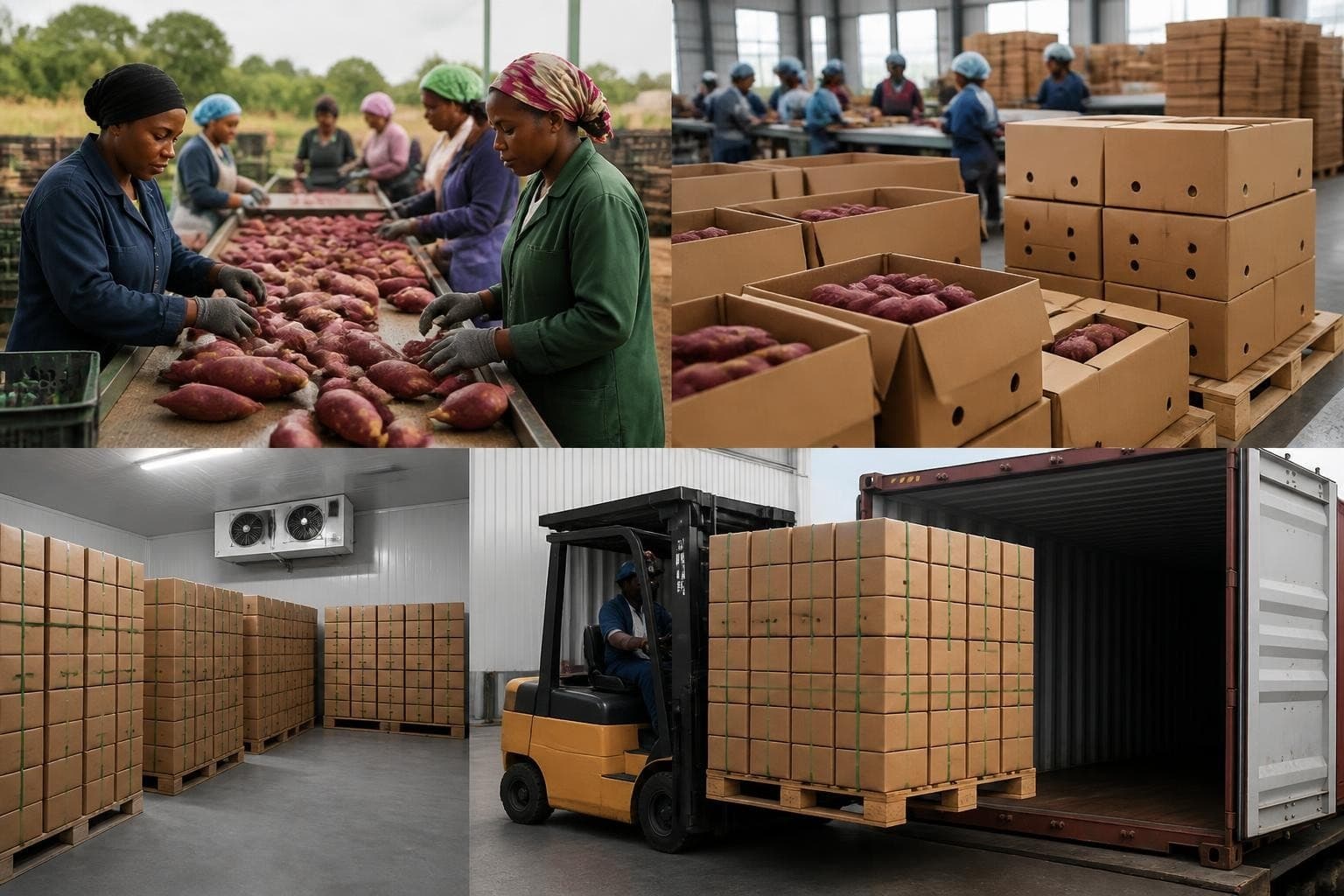
Sweet Potatoes Packaging for Export: Best Practices
Learn essential sweet potatoes packaging for export requirements, including carton types, palletization, ventilation, and cold chain best practices.
International buyers and distributors face a critical challenge when sourcing sweet potatoes from Indonesia and other growing regions: ensuring product arrives in pristine condition despite long transit times, temperature fluctuations, and handling stress. The success of every shipment depends on choosing the right sweet potatoes packaging for export systems that protect quality, extend shelf life, and meet buyer specifications. From initial sorting and grading to final palletization and container loading, packaging decisions directly impact product acceptance, customer satisfaction, and long-term trading relationships. For exporters working with international retailers, wholesalers, and food manufacturers, understanding packaging requirements is as essential as growing quality crops.
Understanding Export Packaging Requirements
Sweet potatoes packaging for export must satisfy multiple objectives simultaneously. The packaging system protects tubers from physical damage during handling, provides adequate ventilation for respiration, maintains temperature stability throughout the cold chain, and complies with phytosanitary regulations in destination markets. Each packaging component-from individual cartons to pallet configurations-plays a specific role in preserving quality during journeys that may span several weeks.
International buyers typically specify packaging requirements based on their distribution channels, storage capabilities, and retail formats. Supermarket chains may require specific carton sizes that fit their display systems and inventory management protocols. Food manufacturers purchasing frozen sweet potatoes may accept different packaging standards than fresh produce distributors. Understanding these varied requirements allows exporters to customize packaging solutions while maintaining operational efficiency.
Regulatory and Phytosanitary Compliance
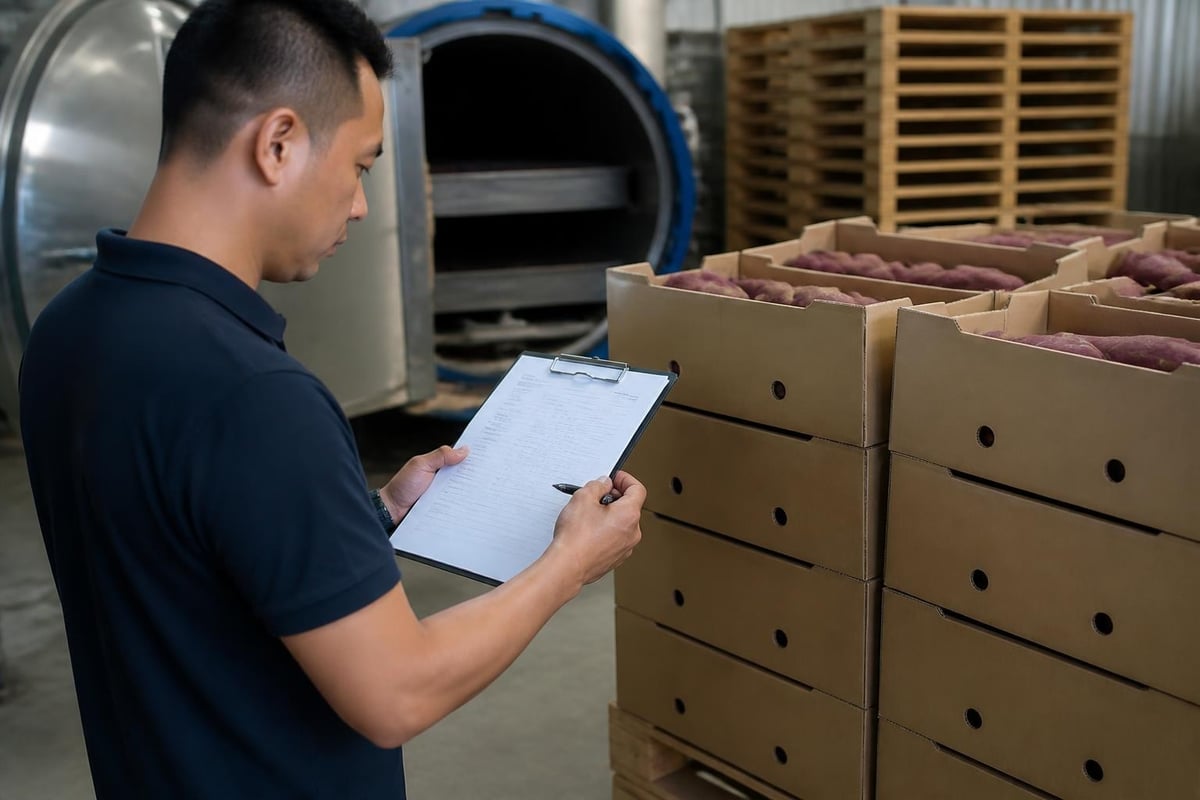
Destination markets enforce strict regulations governing packaging materials, treatment requirements, and labeling standards. The FAO recommended international code of practice for packaging and transport of fresh fruit and vegetables provides comprehensive guidance on acceptable materials and methods. Many countries prohibit untreated wood packaging materials due to pest risks, requiring heat treatment or fumigation certification. Paper-based cartons and plastic crates offer compliant alternatives that meet international phytosanitary standards.
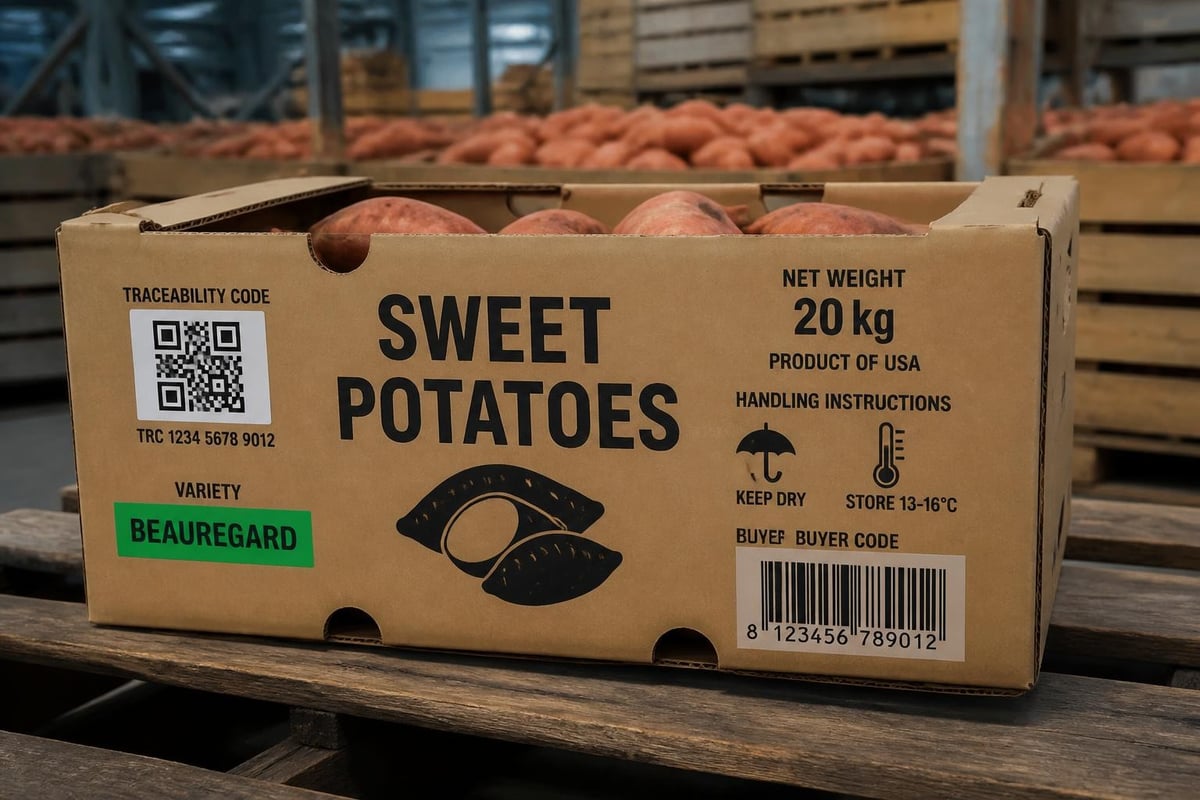
Traceability information must appear clearly on all packaging units. This includes origin identification, variety specifications, packing date codes, and lot numbers that enable tracking throughout the supply chain. When exporting premium Indonesian sweet potatoes, clear labeling demonstrates transparency and facilitates rapid response if quality issues emerge.
Selecting Appropriate Carton Types
Corrugated cardboard cartons remain the most widely used primary packaging for sweet potatoes packaging for export operations. These containers balance cost-effectiveness with adequate protection, while offering flexibility in size, ventilation design, and printing options. Standard carton weights range from 10 kilograms to 20 kilograms per unit, with 10-kilogram and 15-kilogram formats proving most popular for retail distribution channels.
Carton specifications should match the product characteristics and transit conditions. Heavier wall board (double or triple wall corrugated) provides enhanced stacking strength for long-distance shipment and extended storage periods. Ventilation holes must be strategically positioned to promote air circulation without compromising structural integrity. Typical configurations include perforations along the sides and ends, with vent area representing 5-7% of total carton surface.
Carton Design Considerations
| Feature | Standard Specification | Purpose |
|---|---|---|
| Wall type | Double wall corrugated | Stacking strength and protection |
| Vent area | 5-7% of surface | Air circulation and respiration |
| Base weight | 10-20 kg capacity | Handling efficiency and retail compatibility |
| Closure | Interlocking flaps or tape | Secure transit and easy inspection |
| Print quality | Water-resistant ink | Brand visibility and information retention |
The internal configuration of cartons affects product protection and presentation. Dividers and inserts prevent movement during transit, reducing bruising and surface damage. Some buyers request retail-ready packaging that allows cartons to move directly from receiving to display areas without repacking. These systems require enhanced graphics, consumer-facing information, and precise weight consistency.
Alternative packaging materials serve specific market segments. Reusable plastic crates (RPCs) gain popularity in shorter supply chains where return logistics are economical. These containers offer superior ventilation, easier cleaning, and longer service life compared to disposable cartons. However, initial investment costs and logistics complexity limit adoption for distant export markets.
Palletization and Container Loading Strategies
Proper palletization maximizes container utilization while maintaining product safety throughout the journey. Standard export pallets measure 1200mm x 1000mm (EUR pallet) or 1200mm x 800mm, chosen based on destination market preferences and container dimensions. Sweet potatoes packaging for export typically employs 40-foot refrigerated containers (reefers) that accommodate 20-22 pallet positions when properly configured.
Stacking patterns must balance cube utilization with weight distribution and airflow requirements. Typical configurations place 60-80 cartons per pallet across 5-7 layers, with interlocking patterns that enhance stability. Stretch film or strapping secures loads while allowing vertical ventilation through the pallet stack. Corner boards and top frames prevent crushing damage to upper layers.
Loading Best Practices
- Position pallets to maintain central T-bar clearance in reefer containers
- Leave minimum 10cm gap between pallet edges and container walls
- Stagger stack patterns across layers to improve structural integrity
- Avoid blocking air return vents at container floor level
- Secure pallets with appropriate restraints to prevent shifting during transit
Temperature management begins at loading. Pre-cooling product to target temperatures (12-15°C for most varieties) before container stuffing prevents heat buildup and condensation. The FAO training manual on prevention of post-harvest food losses emphasizes that proper cooling and ventilation reduce storage losses significantly. Container thermostats should be set to maintain consistent temperatures throughout the journey, with continuous monitoring via data loggers.
Ventilation and Temperature Control Systems
Sweet potatoes remain metabolically active after harvest, continuing to respire and generate heat within packaging. Inadequate ventilation causes temperature buildup, accelerated aging, and quality deterioration. Sweet potatoes packaging for export must incorporate multi-level ventilation strategies that work together to maintain optimal conditions.
Carton-level ventilation provides the first defense against heat accumulation. Strategically placed holes allow cooled air to penetrate packaging and remove metabolic heat. Research published in Nature Food on postharvest handling impacts demonstrates that proper ventilation significantly extends shelf life and preserves nutrient content during extended storage and transport.
Container Ventilation Configuration
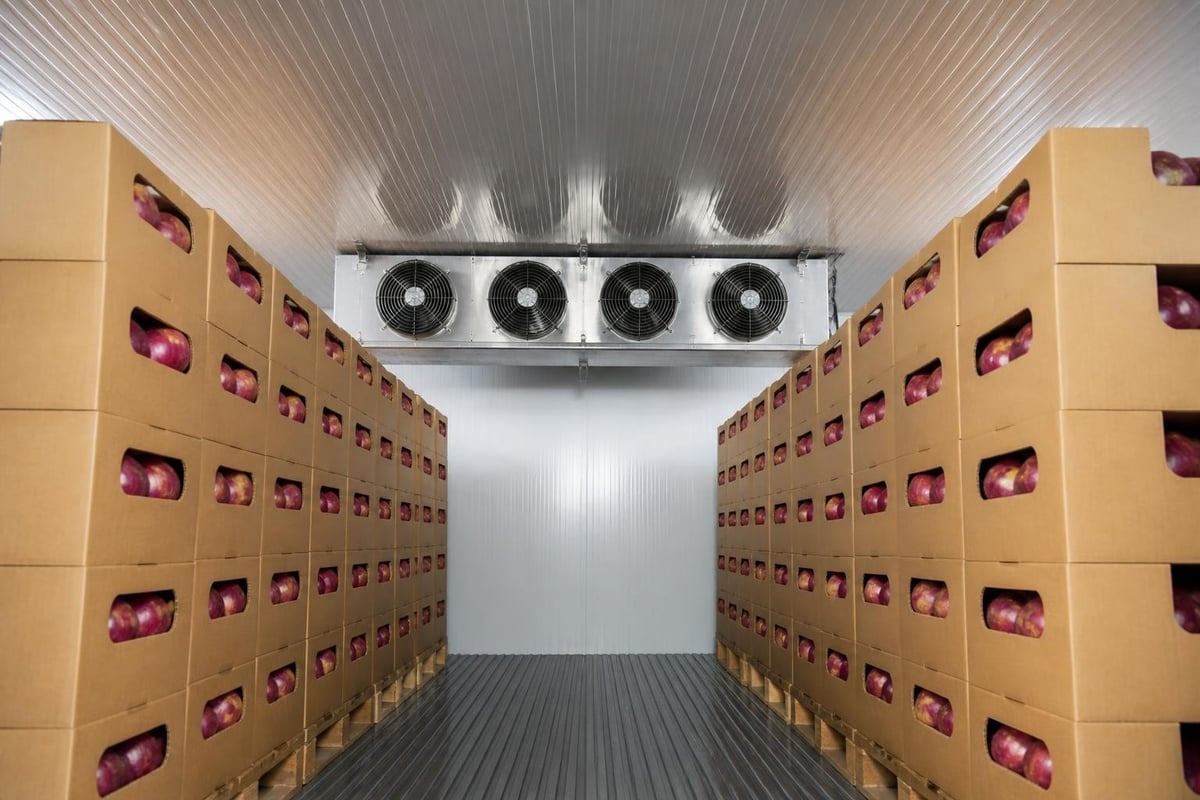
Reefer containers utilize forced-air circulation systems that draw cooled air from the refrigeration unit, pass it through cargo, and return warmed air for re-cooling. This creates a continuous cycle that removes field heat and metabolic warmth. The T-bar floor design elevates pallets and creates a return air channel beneath the cargo. Proper loading maintains this critical airflow path.
Monitoring systems track multiple temperature zones within containers. Modern reefers record supply air, return air, and ambient temperatures at regular intervals. Data loggers placed within cargo provide additional verification of product temperatures throughout transit. This information proves invaluable when resolving claims or demonstrating compliance with sweet potatoes shelf life requirements.
Quality Grading and Pre-Packaging Preparation
Sweet potatoes packaging for export begins well before products enter cartons. Proper grading, sizing, and preparation directly impact how well tubers withstand the packaging and transport process. International buyers expect consistent quality that matches specifications established at contract signing.
The USDA Agricultural Marketing Service standards provide widely recognized grading criteria that many international buyers reference. These specifications define acceptable size ranges, shape characteristics, color uniformity, and defect tolerances. Exporters should establish internal grading protocols that meet or exceed these benchmarks.
Pre-Packaging Steps
- Curing: Controlled temperature and humidity treatment heals harvest wounds and toughens skin
- Cleaning: Gentle brushing removes field soil without damaging protective skin layer
- Sorting: Mechanical or manual separation by size, shape, and quality grade
- Inspection: Removal of defective units that fail quality standards
- Weighing: Precise measurement ensures accurate carton weights and container planning
The NC State Extension guidance on postharvest handling emphasizes that proper curing at 28-30°C and 85-90% relative humidity for 4-7 days dramatically improves storage potential. This step should occur before packaging operations begin, allowing skin to set and minor injuries to heal before the stress of international transport.
Product consistency within individual cartons enhances buyer satisfaction and simplifies their receiving processes. Size grading ensures uniform appearance and cooking characteristics. When supplying export quality sweet potatoes, consistency demonstrates professionalism and attention to buyer requirements.
Customization for Specific Markets
Different destination markets and buyer segments require tailored approaches to sweet potatoes packaging for export. Understanding these variations allows exporters to meet specific requirements while maintaining operational efficiency across diverse customer bases.
Asian markets often prefer smaller retail packages (1-2 kg consumer packs) nested within master cartons. European buyers may specify eco-friendly packaging materials and minimal plastic usage. Middle Eastern importers sometimes request specific variety labeling and origin certification. North American retail chains enforce strict pallet dimensions and barcode requirements for automated distribution systems.
Market-Specific Requirements
| Region | Common Requirements | Typical Specifications |
|---|---|---|
| Europe | Sustainability focus, retail-ready | Recyclable materials, consumer packs |
| Middle East | Halal certification, brand visibility | Clear labeling, premium presentation |
| Asia | Variety-specific packaging | Purple sweet potato separation, size grading |
| North America | Retail compliance, traceability | GS1 barcodes, standardized pallet dimensions |
Purple sweet potatoes often command premium prices and require distinct packaging that highlights their unique characteristics. Separate packaging lines prevent mixing with orange or white varieties, maintaining the visual appeal and market positioning that justifies higher pricing. Clear window panels or printed graphics communicate variety identity to end consumers.
Food service buyers purchasing for restaurant chains or institutional kitchens may accept different packaging standards than retail distributors. Bulk packaging in larger cartons (18-20 kg) reduces handling costs and packaging waste for high-volume users. These buyers prioritize consistent sizing for preparation efficiency rather than consumer presentation.
Documentation and Labeling Standards
Complete and accurate documentation accompanies every aspect of sweet potatoes packaging for export. Carton labels must communicate essential information to handlers, inspectors, and buyers throughout the supply chain. Missing or incorrect documentation causes delays, rejection, and financial losses.
Mandatory label information typically includes:
- Product identification: Variety name, grade, size specification
- Origin data: Country of origin, growing region, farm or packer code
- Weight information: Net weight, gross weight, carton count
- Traceability codes: Lot number, packing date, inspection approval
- Handling instructions: Temperature requirements, orientation indicators
- Buyer information: Consignee name, destination, purchase order reference
Barcode integration streamlines logistics and inventory management. GS1 standards enable automatic identification throughout global supply chains. Some buyers require RFID tags or QR codes that link to detailed product information, certifications, and traceability data. These technologies reduce manual data entry and improve accuracy across international shipments.
Cost Management and Packaging Optimization
Packaging represents a significant cost component in sweet potato export operations. Materials, labor, and logistics expenses accumulate quickly, affecting overall profitability and competitive positioning. Strategic optimization reduces costs while maintaining the protection and presentation quality buyers expect.
Bulk purchasing agreements with packaging suppliers lower per-unit costs for cartons, pallets, and consumables. However, inventory carrying costs and storage space requirements must be balanced against volume discounts. Some exporters establish just-in-time arrangements with local packaging manufacturers, reducing storage needs while maintaining price advantages.
Standardization across product lines improves efficiency and reduces complexity. Using common carton sizes for multiple sweet potato varieties simplifies procurement, reduces setup times during packing operations, and allows flexible allocation based on order requirements. This approach works particularly well when serving bulk sweet potato buyers with varying volume needs.
Packaging Cost Components
Material costs typically account for 60-70% of total packaging expenses. Labor represents 20-25%, including sorting, packing, palletizing, and container loading activities. Equipment depreciation, quality control, and waste disposal comprise the remaining 10-15%. Understanding this breakdown identifies optimization opportunities that deliver meaningful savings.
Automation reduces labor costs but requires capital investment and consistent volumes to justify equipment expenses. Semi-automated lines that assist workers with weighing, labeling, and carton sealing offer middle-ground solutions. These systems improve productivity and accuracy without the complexity and expense of fully automated packaging facilities.
Integration with Cold Chain Management
Sweet potatoes packaging for export functions as one component within comprehensive cold chain management systems. Packaging choices must align with temperature control strategies that begin at harvest and continue through final delivery. Break points in temperature management cause quality losses that proper packaging alone cannot prevent.
Pre-cooling removes field heat before packaging begins. Forced-air cooling systems rapidly reduce product temperature to target levels, typically 12-15°C for most sweet potato varieties. This initial cooling prevents heat accumulation during subsequent packaging operations and prepares product for cold storage and refrigerated transport.
Cold storage facilities maintain consistent temperatures between packing and container loading. Proper air circulation within storage rooms prevents warm spots and ensures uniform cooling. When loading containers, minimizing time outside refrigerated environments preserves the cold chain integrity established during earlier handling stages.
The complete journey from Indonesian growing regions to international buyers involves multiple handoff points where temperature control requires coordination. When importing sweet potatoes from Indonesia, buyers should verify that suppliers maintain cold chain protocols throughout their operations. Temperature documentation provides evidence of proper handling and helps identify any breaks that may affect quality.
Quality Assurance and Inspection Protocols
Systematic quality assurance during packaging operations prevents defects from reaching buyers and protects exporter reputation. Inspection protocols should occur at multiple stages, from incoming product assessment through final container verification. Sweet potatoes packaging for export requires disciplined quality control that identifies and corrects issues before shipment.
Incoming inspection evaluates product quality before packaging begins. Random sampling checks for compliance with grade standards, size specifications, and defect tolerances. Rejected batches return to suppliers or are downgraded to alternative markets, preventing quality issues from contaminating export shipments.
In-line inspection during packing operations catches problems in real-time. Visual checks identify surface defects, improper sizing, or handling damage that occurs during packaging. Weight verification ensures cartons meet target specifications and container planning calculations remain accurate. Many operations employ both manual inspection and automated systems that flag deviations from established parameters.
Final inspection before container loading provides the last opportunity to verify quality and completeness. This includes:
- Carton condition and labeling accuracy
- Pallet stability and wrapping integrity
- Documentation completeness and accuracy
- Temperature compliance and pre-cooling verification
- Container cleanliness and refrigeration function testing
Third-party inspection services offer independent verification that provides additional assurance to international buyers. These inspectors apply internationally recognized standards and provide detailed reports that document compliance with buyer specifications and regulatory requirements.
Seasonal Considerations and Supply Planning
Indonesia's sweet potato production patterns create seasonal variations that affect packaging operations and supply planning. Understanding these cycles allows exporters to optimize inventory, manage packaging materials, and maintain consistent supply to international buyers despite fluctuations in harvest volumes.
West Java's primary growing seasons produce peaks and valleys in available supply throughout the year. Coordinating with multiple farm partners helps smooth these variations, but exporters must still plan packaging capacity and materials procurement around expected volumes. Peak harvest periods require maximum packaging throughput, while slower periods allow maintenance, training, and process improvements.
Weather conditions affect both crop availability and packaging requirements. Rainy season harvests may require additional cleaning and drying steps before packaging. Humidity levels during packing operations influence condensation risks and require adjusted ventilation strategies. Temperature variations between growing regions and export facilities demand flexible cooling protocols that adapt to product conditions.
Building buffer inventory of packaging materials prevents disruptions during peak demand periods. However, storage space limitations and material shelf life considerations require careful planning. Some exporters establish framework agreements with packaging suppliers that guarantee availability during critical periods while minimizing inventory carrying costs.
Effective sweet potatoes packaging for export requires integrated systems that protect quality, ensure compliance, and meet buyer expectations throughout international supply chains. Success depends on attention to material selection, ventilation design, temperature management, quality control, and documentation accuracy at every stage from harvest to delivery. PT Cakra Baja Niaga combines expertise in export-grade packaging systems with direct farm partnerships across West Java to deliver premium Indonesian sweet potatoes that arrive in optimal condition for international buyers. Contact our team to discuss your specific packaging requirements, request product samples, or receive detailed export quotations for your distribution channels.
Looking to source premium Indonesian sweet potatoes?
PT Cakra Baja Niaga supplies export-grade Cilembu, Purple, and Murasaki varieties to buyers worldwide.
Continue reading
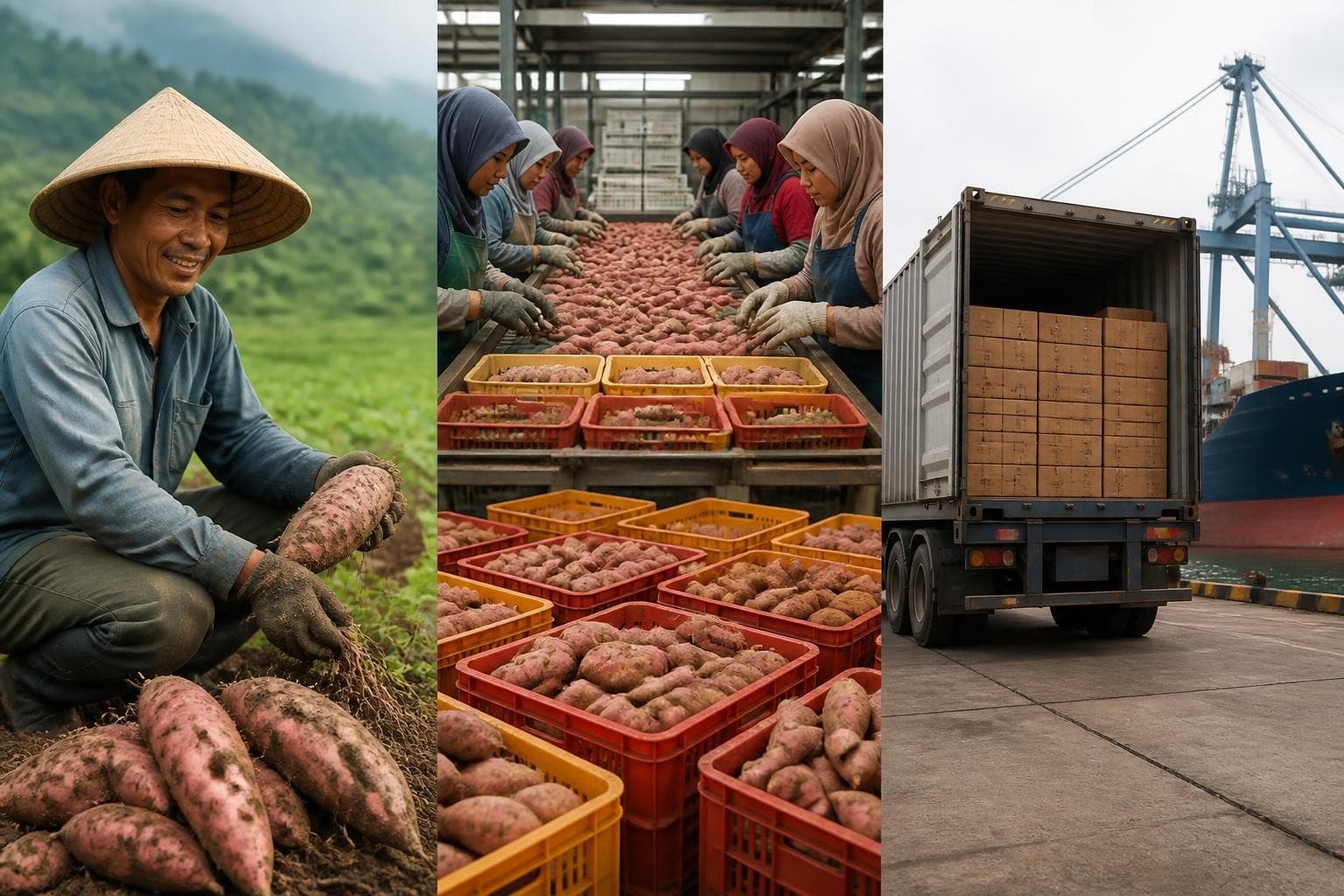
Wholesale Sweet Potatoes Indonesia: B2B Export Guide 2026
Source premium wholesale sweet potatoes Indonesia for import. Quality standards, export logistics, varieties, pricing & supplier partnerships.
Read article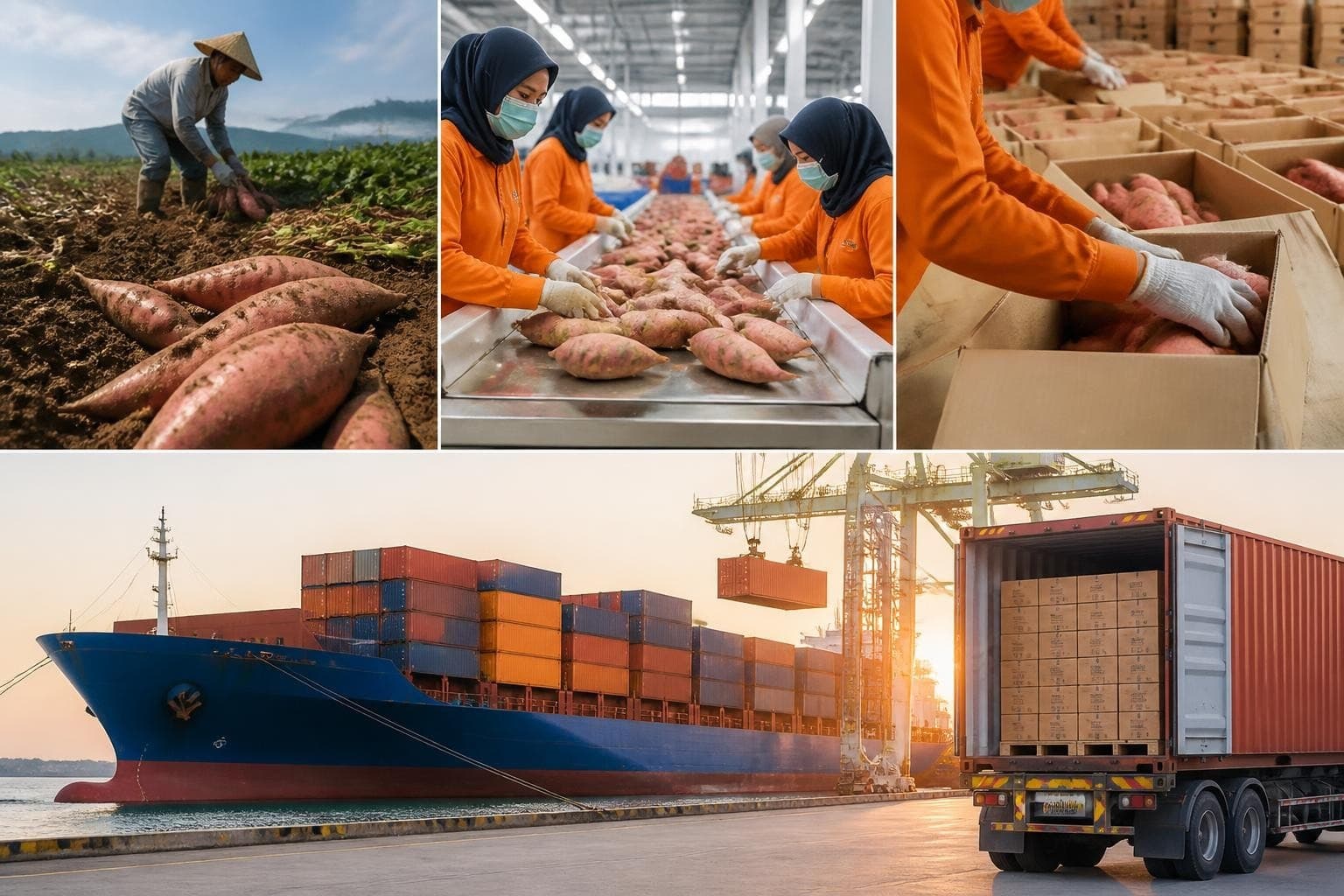
Sweet Potatoes Supplier Indonesia: Quality & Export Guide
Find reliable sweet potatoes supplier Indonesia offering premium export quality. Learn about sourcing, grading, logistics, and partnerships.
Read article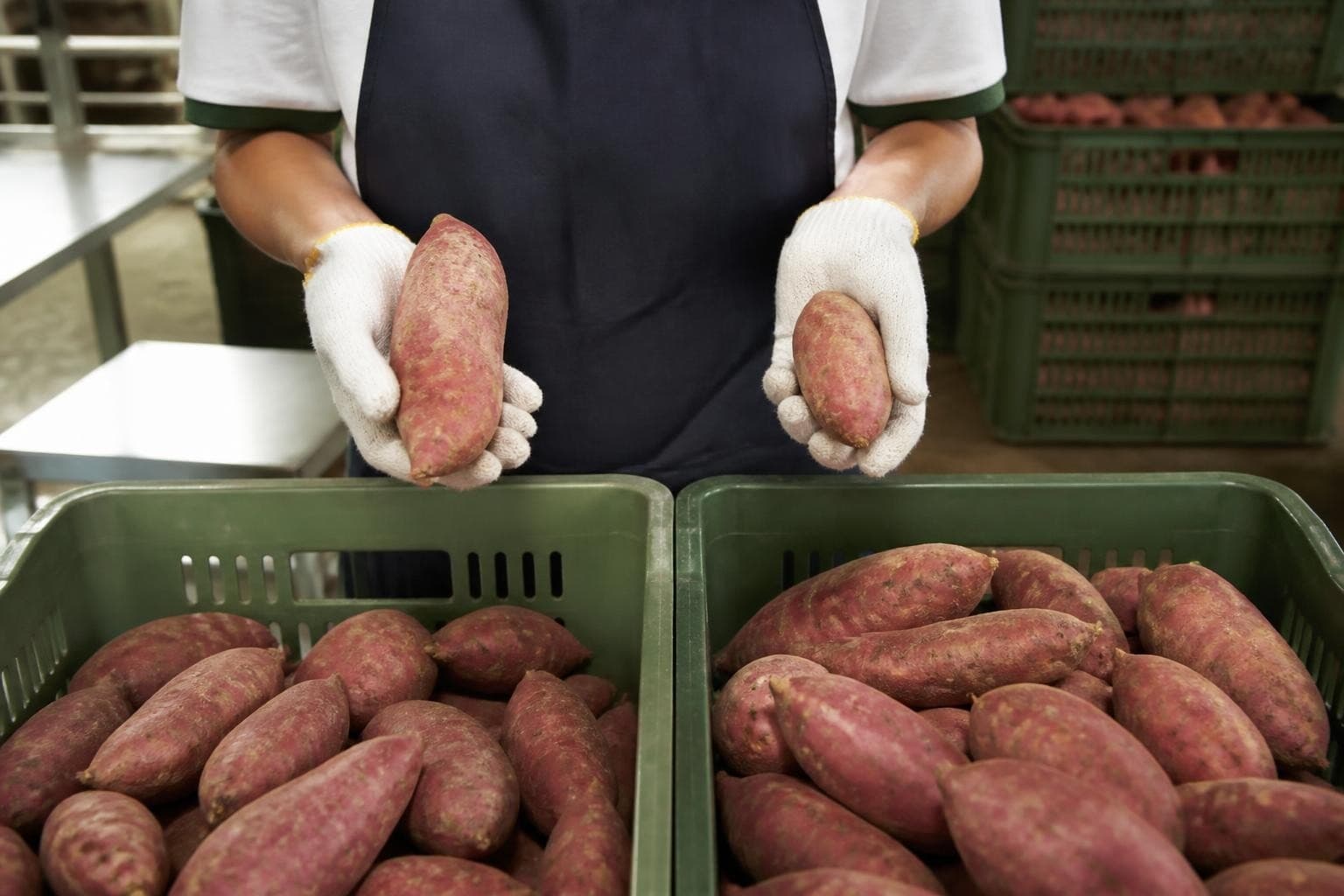
Sweet Potatoes Grading Guide for International Buyers
Comprehensive sweet potatoes grading guide for exporters and importers. Learn USDA standards, size classification, defect tolerance, and quality control.
Read article