
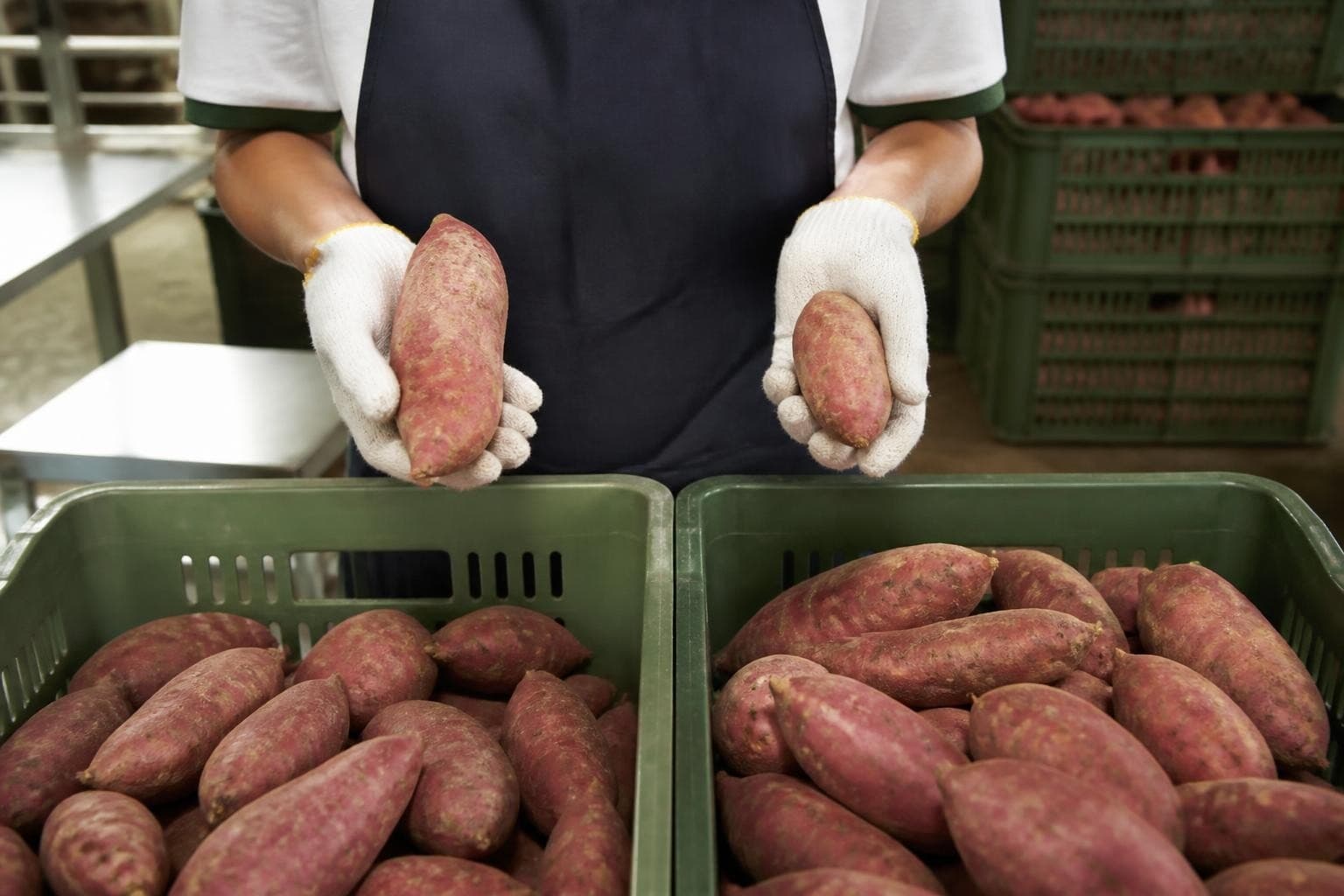
Sweet Potatoes Grading Guide for International Buyers
Comprehensive sweet potatoes grading guide for exporters and importers. Learn USDA standards, size classification, defect tolerance, and quality control.
Understanding proper grading standards is essential for international sweet potato trade. A comprehensive sweet potatoes grading guide enables exporters, importers, and distributors to establish consistent quality benchmarks, reduce rejections, and maintain profitable partnerships across borders. For buyers sourcing from Indonesia and other origins, standardized grading ensures transparency in specifications, pricing, and contractual agreements. This guide examines the official grading systems, practical classification methods, and quality control practices that define premium sweet potato exports in 2026.
Official USDA Grading Standards
The United States Department of Agriculture establishes the most widely recognized grading framework for sweet potatoes in international trade. The USDA Agricultural Marketing Service standards provide legal definitions that many buyers reference regardless of origin country. These standards define two primary fresh market grades: U.S. No. 1 and U.S. No. 2.
U.S. No. 1 grade sweet potatoes must be firm, fairly smooth, fairly well shaped, and free from serious damage caused by dirt, disease, insects, or mechanical injury. This grade permits minor skin abrasions and slight shape irregularities that do not materially affect appearance or cooking quality. The tolerances allow up to 10 percent by weight that fails to meet the requirements, with not more than 5 percent for serious damage.
Size Classifications Within Grades
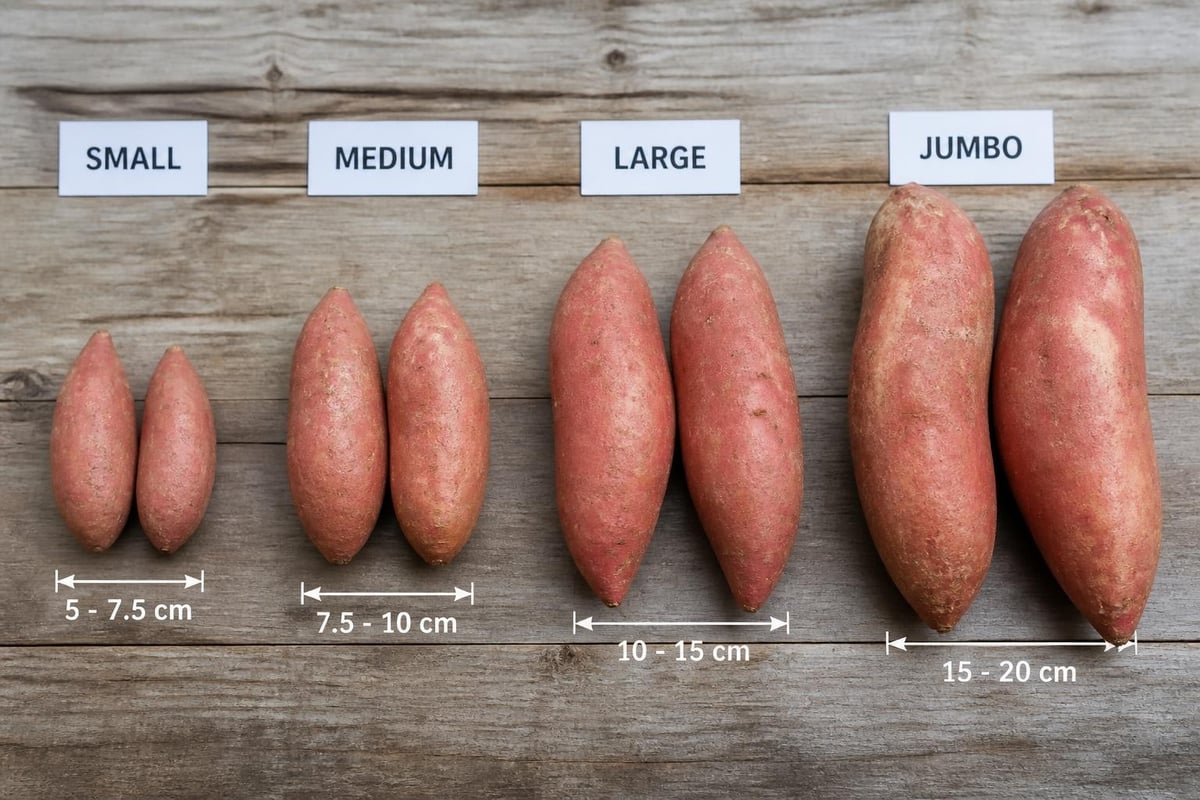
Size classification works independently from grade designation. A sweet potato can qualify as U.S. No. 1 in any size category, provided it meets quality requirements. Standard size categories include:
- Small: 1.75 to 2.25 inches diameter
- Medium: 2.25 to 3.25 inches diameter
- Large: 3.25 to 3.75 inches diameter
- Jumbo: Over 3.75 inches diameter
Length requirements typically range from 3 to 9 inches for commercial grades, though specific buyers may request narrower ranges. Export quality sweet potatoes from Indonesia often target the medium and large categories, which command premium prices in Japan, Singapore, and Middle Eastern markets.
Shape and Appearance Criteria
Shape evaluation represents a critical component of any sweet potatoes grading guide. Fairly well shaped means the sweet potato has the characteristic shape for its variety, without pronounced constrictions, side roots, or growth cracks that affect peeling efficiency or presentation.
Surface smoothness directly impacts processing yield and consumer appeal. Premium grades exhibit:
- Minimal russeting or skin roughness
- Absence of deep growth cracks
- Limited secondary root scars
- Uniform skin color appropriate to variety
Color Uniformity Standards
Skin color should be characteristic of the variety without discoloration from disease, sunscald, or improper curing. For orange-fleshed varieties common in Indonesian production, the skin typically ranges from copper to deep red-orange. Purple sweet potatoes exhibit purple to burgundy skin, while Japanese varieties may show purple skin with cream or white flesh.
Internal flesh color must match varietal expectations. Buyers often specify flesh color requirements in purchase contracts, particularly for retail packaging where cross-sections appear in marketing materials. Discoloration, hollowing, or vascular streaking reduces grade designation.
Defect Assessment and Tolerance
Systematic defect evaluation separates premium from commercial grades. The sweet potatoes grading guide distinguishes between damage and serious damage, with specific tolerances for each category.
Damage includes:
- Skin breaks healed but visible
- Minor insect injury not affecting flesh
- Slight bruising without decay
- Surface dirt adhering after washing
Serious damage comprises:
- Decay in any amount
- Wet breakdown or soft rot
- Freezing injury
- Cuts penetrating the flesh
- Wireworm or weevil damage exceeding 3mm depth
| Defect Type | U.S. No. 1 Tolerance | U.S. No. 2 Tolerance |
|---|---|---|
| Total defects | 10% by weight | 20% by weight |
| Serious damage | 5% maximum | 10% maximum |
| Decay | 2% maximum | 4% maximum |
| Size variation | 10% off-size | 10% off-size |
These tolerances apply at shipping point. Destination inspections may allow additional deterioration during transit, though sweet potatoes shelf life for export depends heavily on proper temperature and humidity management throughout the cold chain.
Practical Grading Implementation
Implementing a sweet potatoes grading guide requires trained personnel, appropriate facilities, and consistent protocols. Postharvest handling practices from NC State Extension emphasize the importance of grading line design and inspector training.
Grading Line Setup
Professional packing operations establish dedicated grading stations with:
- Adequate lighting: 100-150 foot-candles minimum for defect detection
- Grading tables: White or light-colored surfaces to enhance visibility
- Size templates: Physical guides ensuring consistent diameter classification
- Defect guides: Reference samples showing borderline damage examples
- Scale stations: Accurate weight verification for size and lot tracking
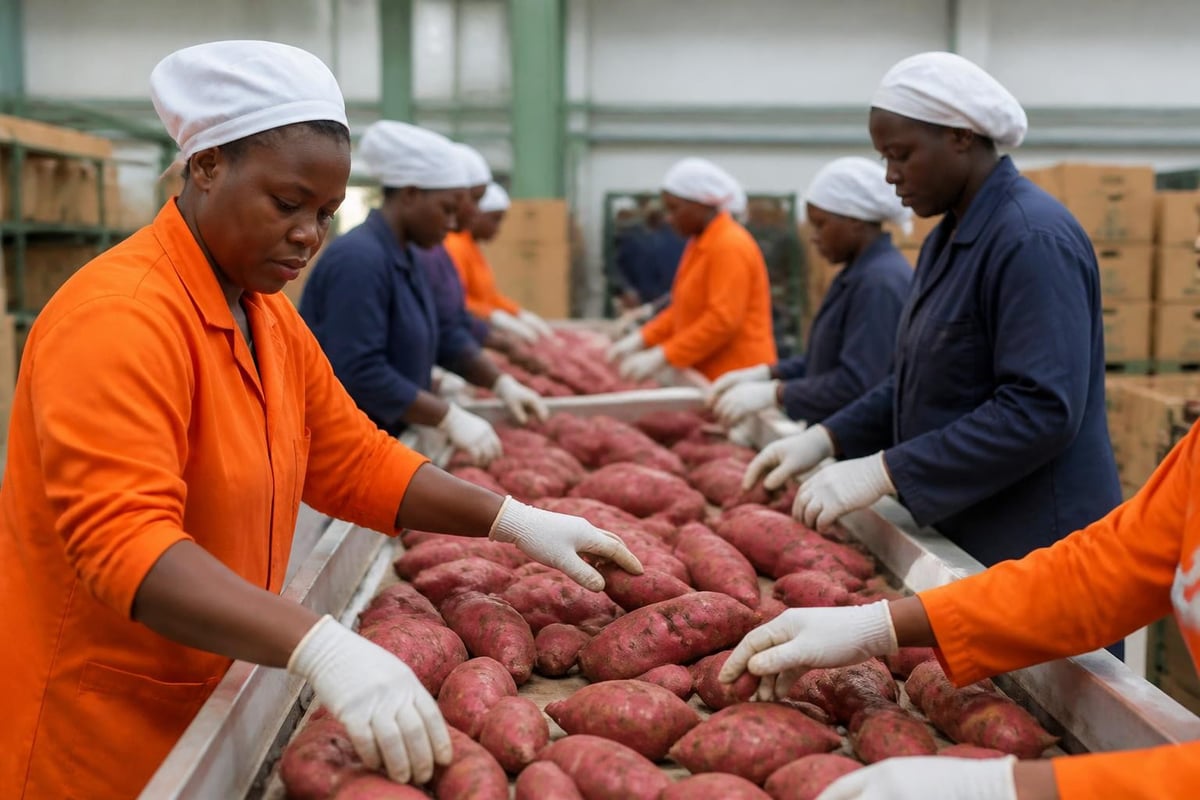
Graders examine each sweet potato individually, rotating it to inspect all surfaces. High-volume operations may employ optical sorting technologies that use machine vision to classify size, detect surface defects, and separate grades automatically. These systems increase throughput while maintaining consistency, particularly valuable for exporters handling container-scale volumes.
Curing Impact on Grade Quality
Curing fundamentally affects gradeable yield and marketable quality. This controlled healing process occurs before final grading and directly influences the percentage of sweet potatoes meeting premium grade standards.
Proper curing conditions include:
- Temperature: 85-90°F (29-32°C)
- Relative humidity: 85-90%
- Duration: 4-7 days
- Ventilation: Sufficient airflow preventing condensation
During curing, minor skin abrasions heal, moisture content stabilizes, and starch converts to sugars, improving flavor. Postharvest handling recommendations from University of Florida detail how inadequate curing increases shrinkage, skin damage susceptibility, and decay incidence during storage and shipping.
Sweet potatoes graded immediately after harvest without curing show significantly higher rejection rates. Surface moisture, incomplete wound healing, and field heat contribute to damage during handling. Indonesian exporters working with partner farms in West Java implement controlled curing protocols to maximize U.S. No. 1 yields before export packing.
International Grading Variations
While USDA standards dominate international trade communication, regional variations exist. Understanding these differences prevents confusion in cross-border transactions.
Japanese Market Standards
Japan maintains distinct grading criteria emphasizing:
- Uniform shape with minimal taper
- Smooth skin with very limited scarring
- Specific length-to-diameter ratios by variety
- Premium pricing for honey sweet potato varieties with high Brix
Japanese buyers often specify stricter tolerances than USDA No. 1, particularly for retail packaging. Export contracts may limit skin breaks to 1% by count and require 95% color uniformity within lots.
European Union Requirements
EU markets reference international standards but add specific requirements for:
- Maximum pesticide residues (MRL compliance)
- Traceability documentation by production lot
- Food safety certification (GLOBALG.A.P., FSSC 22000)
- Organic certification where applicable
These additional requirements complement grade standards, creating layered qualification criteria for premium Indonesian sweet potatoes entering European distribution channels.
Size Distribution Optimization
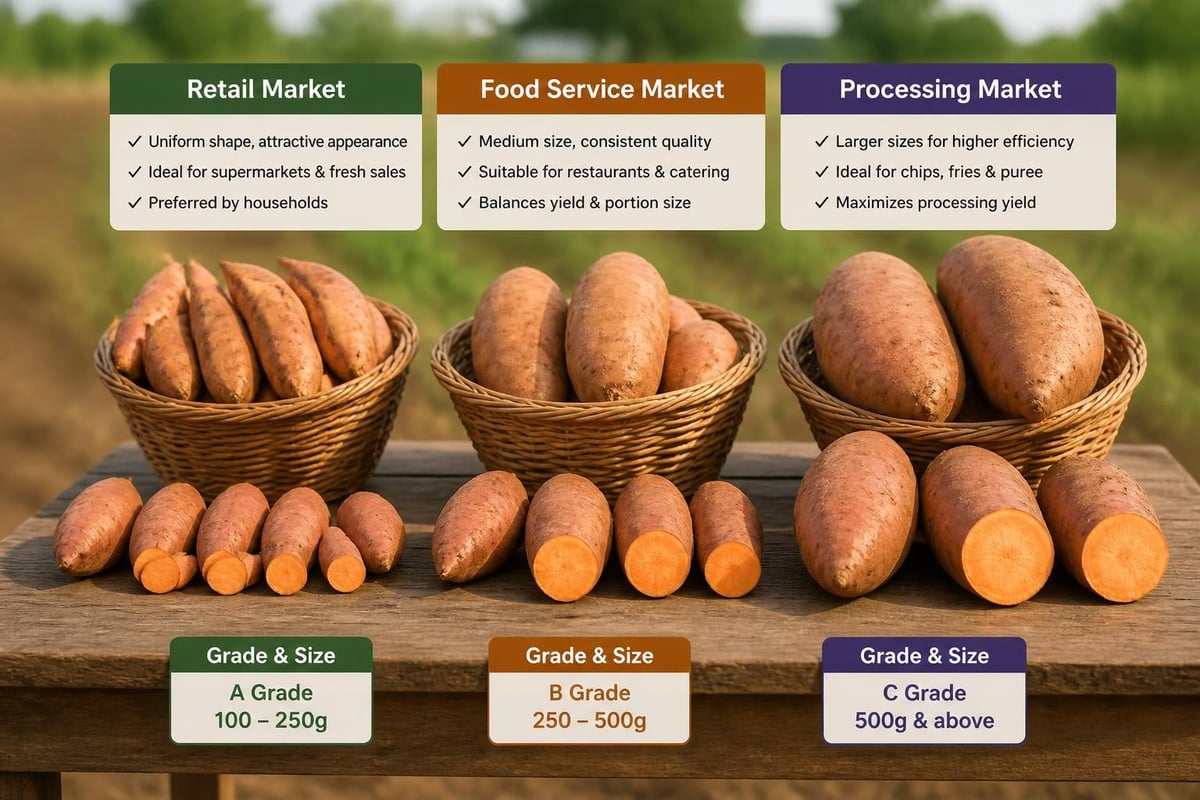
Commercial sweet potatoes grading guide application requires understanding target market size preferences. Different buyer segments demand specific size profiles.
Retail supermarkets prefer:
- Medium to large sizes (2.25-3.75 inches)
- Uniform appearance within packages
- Individual piece weights of 200-400 grams
- Consistent length for display case arrangement
Food service distributors accept:
- Wider size ranges if priced accordingly
- Slight shape variations that don't affect preparation
- Bulk packaging reducing unit costs
- Focus on flesh quality over cosmetic perfection
Processing manufacturers prioritize:
- Consistent internal quality (flesh color, dry matter)
- Minimal defects affecting yield
- Size uniformity for mechanical peeling efficiency
- Volume availability over premium appearance
Strategic grading separates production into these market channels, maximizing revenue per ton. Bulk sweet potatoes suppliers benefit from this market-specific segregation, meeting diverse buyer requirements from single production lots.
Quality Control Documentation
Professional sweet potatoes grading guide implementation requires systematic documentation. Quality control records serve multiple purposes in international trade:
- Shipment verification: Confirming grade and size compliance before loading
- Dispute resolution: Providing evidence if arrival quality questions arise
- Process improvement: Identifying grading inconsistencies requiring training
- Certification support: Demonstrating compliance for third-party audits
Essential Documentation Elements
Quality control files should include:
| Document Type | Contents | Retention Period |
|---|---|---|
| Grading reports | Grade percentages, size distribution, defect summaries | 24 months |
| Sample photos | Representative images of each lot | 12 months |
| Inspector records | Grader names, dates, lot assignments | 24 months |
| Customer specs | Contracted requirements by buyer | Contract duration + 12 months |
| Corrective actions | Non-conformance investigations and responses | 24 months |
Digital record systems increasingly replace paper documentation, enabling real-time data sharing with buyers and facilitating container shipping coordination. Cloud-based quality management platforms allow importers to review grading results before shipment departure, reducing arrival surprises.
Grading for Different Product Forms
The sweet potatoes grading guide varies by final product format. Fresh whole sweet potatoes represent one category, but other forms require modified approaches.
Fresh Cut and Prepared Products
Pre-cut sweet potatoes for food service demand:
- Higher starting grade (U.S. No. 1 minimum)
- Zero tolerance for decay or internal defects
- Specific size ranges for processing equipment
- Immediate cold chain maintenance after cutting
Frozen Sweet Potato Products
Frozen sweet potatoes suppliers apply grade standards focused on internal quality:
- Flesh color consistency within batches
- Dry matter content meeting processing targets
- Absence of internal defects revealed during cutting
- Sugar content appropriate for product application
Shape and minor surface defects become less critical when sweet potatoes undergo peeling and processing. However, serious damage, decay, and internal quality failures still result in rejection.
Training and Certification Programs
Consistent grading requires trained personnel understanding both standards and practical application. Investment in grader training directly correlates with reduced customer complaints and higher premium-grade yields.
Formal Training Components
Effective grading training programs include:
- Standard familiarization: Detailed review of USDA or applicable standards
- Defect recognition: Hands-on practice identifying borderline cases
- Size estimation: Calibration exercises using templates and calipers
- Speed and accuracy: Balancing throughput with quality assessment
- Documentation: Proper completion of grading forms and digital systems
Some exporters pursue third-party auditor certification from organizations like Postharvest Education Foundation, which validates grading competency and enhances buyer confidence. Certified grading operations command premium prices by demonstrating measurable quality control capabilities.
Seasonal Grading Considerations
Sweet potato quality and gradeable yields vary by harvest timing and growing conditions. A comprehensive sweet potatoes grading guide accounts for seasonal factors affecting grade distribution.
Early season harvests in Indonesia typically occur April through June, with harvest timing influenced by regional climate patterns. Early harvests may show:
- Smaller average sizes
- Thinner, more delicate skins
- Lower dry matter content
- Higher skin damage susceptibility during handling
Main season harvests (July through October) generally produce:
- Larger size distribution
- Thicker, more resilient skins
- Optimal dry matter and sugar development
- Better storage and shipping performance
Buyers sourcing year-round supplies should understand these seasonal quality variations and adjust specifications or pricing accordingly. Transparent communication about harvest timing and expected grade distributions builds trust in fresh sweet potatoes export relationships.
Economic Impact of Grading Precision
Accurate grading directly affects profitability for both exporters and importers. Under-grading (assigning premium sweet potatoes to lower grades) sacrifices revenue. Over-grading (claiming higher grades than quality justifies) triggers rejections, claims, and relationship damage.
Price Differentials by Grade
Typical market price spreads between grades illustrate grading's financial significance:
- U.S. No. 1, Medium size: Baseline pricing (100%)
- U.S. No. 1, Large size: 110-120% of baseline
- U.S. No. 2, Mixed sizes: 60-75% of baseline
- Processing/cull grade: 25-40% of baseline
On a 20-ton container shipment, the difference between 80% versus 90% U.S. No. 1 yield represents thousands of dollars in revenue impact. Professional grading optimization recovers this value while maintaining buyer satisfaction through accurate representation.
Grading System Integration
Modern sweet potatoes grading guide implementation increasingly integrates with broader quality management and traceability systems. This integration serves multiple stakeholder needs:
For exporters: Grading data feeds inventory management, pricing algorithms, and customer-specific packing instructions. Export packaging specifications reference grade and size data to determine optimal pack configurations.
For importers: Digital grade certificates with photos enable pre-shipment approval and reduce inspection delays at destination. Integration with purchase orders streamlines receiving and quality verification.
For regulatory compliance: Traceability systems linking production lots through grading to final shipment satisfy import requirements in markets demanding farm-to-shelf documentation.
Cloud platforms from providers serving agricultural exporters now offer mobile grading applications, barcode integration, and automatic data synchronization. These tools reduce manual documentation burden while improving accuracy and accessibility.
Specialized Variety Grading
Different sweet potato varieties require modified grading approaches within the standard framework. Indonesian sweet potato varieties encompass diverse characteristics affecting grade evaluation.
Purple Sweet Potato Considerations
Purple sweet potatoes demand specific attention to:
- Skin color intensity and uniformity
- Internal purple pigmentation consistency
- Absence of white flesh streaking
- Shape regularity for visual appeal
Premium Murasaki sweet potatoes targeted at Japanese markets face particularly strict grading, with shape and surface smoothness requirements exceeding standard U.S. No. 1 criteria.
Specialty Market Varieties
Cilembu honey sweet potatoes, known for exceptional sweetness, emphasize:
- High Brix measurement (internal quality)
- Specific shape profile (elongated, uniform)
- Premium skin condition for retail presentation
- Harvest maturity affecting sugar development
These variety-specific requirements supplement rather than replace standard grading criteria, creating layered quality specifications for premium market segments.
Technology-Enhanced Grading
Automation and technology increasingly augment manual grading processes. While human expertise remains essential, technological tools enhance consistency and throughput.
Near-Infrared Spectroscopy
NIR systems measure internal quality non-destructively:
- Dry matter content prediction
- Sugar concentration estimation
- Internal defect detection
- Flesh color verification
This technology enables sorting based on cooking quality and flavor potential, not just external appearance, creating new premium grade categories based on eating experience.
Computer Vision Systems
Advanced imaging systems evaluate:
- Size measurement with sub-millimeter precision
- Surface defect detection and classification
- Color uniformity assessment
- Shape analysis and regularity scoring
These systems process sweet potatoes at rates exceeding 10 per second while maintaining assessment consistency impossible for human graders over extended shifts.
Implementing a comprehensive sweet potatoes grading guide establishes the foundation for successful international trade partnerships. Consistent application of recognized standards, systematic quality documentation, and investment in grader training ensure that buyers receive the quality they contract for while exporters maximize the value of their production. PT Cakra Baja Niaga applies rigorous grading protocols aligned with international standards across all export shipments from West Java partner farms. Contact our export team for detailed grade specifications, sample shipments, or quotations on premium Indonesian sweet potatoes meeting your exact requirements.
Looking to source premium Indonesian sweet potatoes?
PT Cakra Baja Niaga supplies export-grade Cilembu, Purple, and Murasaki varieties to buyers worldwide.
Continue reading
Wholesale Sweet Potatoes Indonesia: B2B Export Guide 2026
Source premium wholesale sweet potatoes Indonesia for import. Quality standards, export logistics, varieties, pricing & supplier partnerships.
Read article
Sweet Potatoes Supplier Indonesia: Quality & Export Guide
Find reliable sweet potatoes supplier Indonesia offering premium export quality. Learn about sourcing, grading, logistics, and partnerships.
Read article
Sweet Potatoes Quality Standards for Export in 2026
Comprehensive guide to sweet potatoes quality standards for international trade. Learn grading criteria, USDA standards, and export requirements.
Read article